

Children learn about the world through their senses. Sensory play goes beyond just fun and games, it’s an essential part of early childhood development. Exploring textures, sounds, colours, movement, and more strengthens a child’s ability to think, communicate, and grow.
At Oz Education, our focus is always on the many benefits of sensory play. We understand that it supports every part of a child’s development, whether that be cognitive, emotional, social, or physical. It builds confidence and curiosity, both of which lay the foundations for their transition into school and later life.
What is Sensory Play?
Parents often ask us the question “what is sensory play?”. Simply put, it’s any activity that engages children through touch, sight, sound, smell, taste, movement, balance, and body awareness.
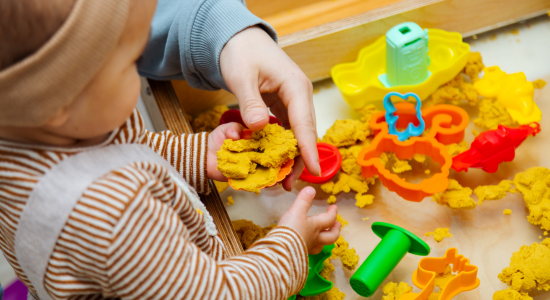
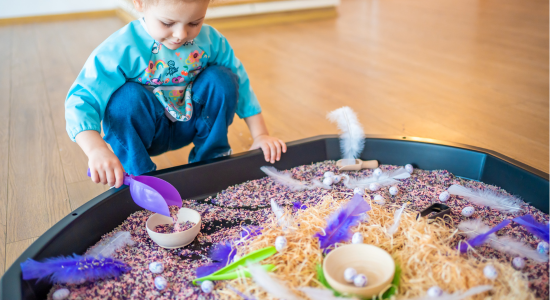
To many it looks like messy play such as finger painting, splashing in water, or digging into sand. Whilst this is a big part of it, it’s actually a powerful learning tool. By stimulating the senses, children’s brains form new connections, building pathways that support problem-solving, creativity, and emotional wellbeing.
The beauty of sensory play is that it naturally adapts to a child’s age and stage. Whether it’s sensory play for babies feeling textures or sensory play for toddlers experimenting with sound and movement, every activity encourages exploration and learning in a way that feels fun and exciting.
Understanding the Main Benefits of Sensory Play
Brain Development & Learning
One of the biggest sensory play benefits is its proven impact on brain growth. Activities like scooping, pouring, or stacking build nerve connections that support problem-solving, memory, and scientific thinking.
Motor Skills
From squishing play dough to climbing over cushions, sensory play develops both fine motor skills (small hand movements) and gross motor skills (whole-body movement). These skills are needed in everyday tasks like writing, dressing, and climbing.
Language & Communication
Children naturally expand their vocabulary when describing textures, sounds, and actions. Sensory play creates opportunities for rich conversations, storytelling, and building communication confidence.
Emotional Regulation
Still wondering why sensory play is important? It can also help children manage their feelings. Sensory activities like watching bubbles float or sifting sand are soothing, helping children regulate emotions and focus attention.
Creativity & Curiosity
With sensory play there are no “right answers.” Children experiment, test, and explore, building independence, curiosity, and a lifelong love for learning.
Creating Fun and Engaging Sensory Play Activities
Here are some simple and fun ideas you can try at home. There isn’t necessarily a right and wrong here; it’s about creating an environment where your child can engage, explore and learn:
Babies (0–2 years)
Sensory play for babies is all about gentle exploration.
Watching and popping bubbles
Scrunching colourful paper or fabric
Finger or sponge painting
Exploring safe textures like soft toys or smooth spoons
Toddlers (2–3 years)
Sensory play for toddlers builds independence and social skills.
Playing with musical instruments (drums, shakers)
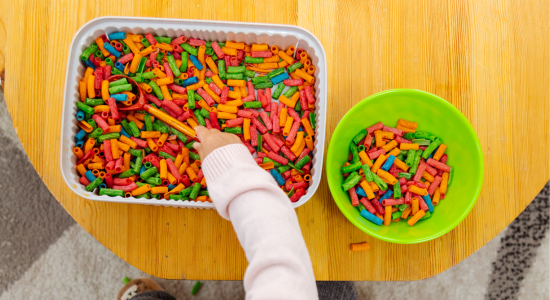
Sorting colours and exploring light/dark
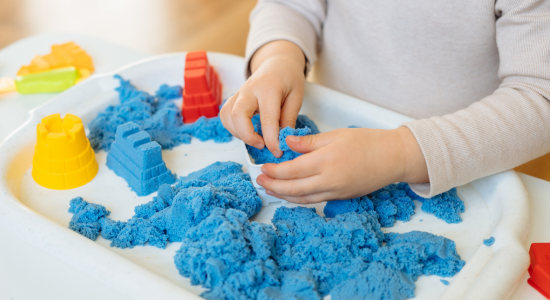
Digging into kinetic sand
Splashing in water play tubs.
Pre-schoolers (3–5 years)
Sensory play becomes something more imaginative and experimental.
Building shapes with blocks or natural objects
Experimenting with sound (echoes, tapping, rhythm games)
Messy play with play dough, mud, or jelly
Exploring textures and patterns in leaves, shells, or stones
Need Some Help?
Sensory play is just one of the ways to inspire your child every day. Our early learning centres provide safe, purpose-built spaces where sensory activities are part of a child’s daily journey of discovery.
Families looking for high-quality care can find us in multiple locations, including our childcare centres in Melbourne and childcare centres in Sydney.
Discover the difference for yourself. Book a tour at your nearest centre and see how we nurture curious young minds to set them up for later life.